

Cardiology Specialist Penang | Heart & Vascular Care
Meet Our Cardiologist
Our cardiologists are dedicated to protecting your heart and cardiovascular health through comprehensive assessment, accurate diagnosis, advanced interventional procedures, and personalised treatment.
At Bagan Specialist Centre, we provide a wide range of cardiac services — from routine heart screening, electrocardiography (ECG), echocardiography, and non-invasive cardiac assessment to coronary angiography, angioplasty, pacemaker implantation, and emergency treatment for heart attacks.
Our cardiology team also manages complex coronary artery disease, heart rhythm disorders, heart failure, and selected peripheral vascular conditions.
Why Choose Bagan Specialist Centre?
Bagan Specialist Centre provides comprehensive cardiology services for patients in Penang Mainland and the surrounding Northern Region.
Our hospital is equipped with advanced cardiac catheterisation facilities, modern cardiovascular imaging technologies, and facilities designed to support patients with limited mobility.
Whether you are looking for a cardiologist in Penang for chest pain assessment, heart screening, coronary angiography, angioplasty, pacemaker implantation, or long-term management of heart disease, our cardiology team provides timely, specialised, and patient-centred care.
FAQ
Our cardiology team diagnoses and treats a broad range of acute and chronic cardiovascular conditions, including:
- Coronary artery disease and heart attacks: Including blocked or narrowed coronary arteries, angina, and Acute Coronary Syndrome (ACS).
- Heart rhythm disorders: Including arrhythmias, abnormally fast or slow heart rhythms, and other electrical abnormalities of the heart.
- Heart failure and heart function disorders: Including weakened heart muscle and conditions affecting the heart’s ability to pump effectively.
- Peripheral vascular disease: Including narrowing or blockage of blood vessels outside the heart, particularly peripheral artery disease affecting the lower limbs.
Treatment is individualised according to each patient’s symptoms, medical condition, test results, and overall cardiovascular risk.
Seek immediate medical attention if you develop sudden chest pain, pressure, tightness, heaviness, or a squeezing sensation in the chest.
Chest discomfort may be a warning sign of Acute Coronary Syndrome or a heart attack, particularly when accompanied by:
- Shortness of breath
- Cold sweats
- Nausea or vomiting
- Dizziness or fainting
- Sudden or unexplained palpitations
- Pain or discomfort spreading to the arm, shoulder, neck, jaw, back, or upper abdomen
A heart attack is a medical emergency. Early assessment and treatment are important because delays in restoring blood flow may result in greater damage to the heart muscle.
Treatment depends on the type and severity of the heart attack, the patient’s clinical condition, and the findings from diagnostic investigations. When a coronary artery is critically narrowed or completely blocked, an emergency coronary angiogram may be performed to identify the affected artery.
If appropriate, coronary angioplasty may then be performed to reopen the blocked artery and restore blood flow to the heart muscle. A stent may be inserted to help keep the artery open. In selected cases, advanced intracoronary imaging and physiological assessment may also be used to guide treatment and optimise the outcome of the procedure.
Both procedures are performed through a catheter inserted into a blood vessel, but they serve different purposes.
Coronary Angiogram – A coronary angiogram is a diagnostic procedure used to identify narrowing or blockage in the coronary arteries. Contrast dye is injected into the coronary arteries while X-ray images are taken, allowing the cardiologist to assess blood flow and locate significant blockages.
Coronary Angioplasty – Coronary angioplasty is a treatment used to reopen a significantly narrowed or blocked coronary artery. A small balloon is inflated within the narrowed segment to improve blood flow.
In many cases, a stent (a small expandable mesh tube) is then implanted to support the artery and keep it open.
The decision to perform angioplasty and whether a stent is required depends on the characteristics of the blockage and the patient’s overall clinical condition.
An echocardiogram is a safe, painless, and non-invasive ultrasound examination of the heart.
It uses sound waves to produce real-time images of the heart and allows the cardiologist to assess:
- The pumping strength of the heart
- Heart chamber size
- Heart valve structure and function
- Abnormalities of the heart muscle
- Fluid around the heart
- Certain structural heart conditions
An echocardiogram may be recommended for patients with symptoms such as shortness of breath, chest discomfort, heart murmurs, swelling of the legs, palpitations, or suspected heart failure.
A pacemaker is a small electronic device implanted under the skin, usually in the upper chest, to help regulate an abnormally slow heartbeat. The device continuously monitors the heart rhythm and delivers small electrical impulses when necessary to maintain an appropriate heart rate.
A pacemaker may be recommended for patients with significant bradycardia, heart block, or certain heart rhythm disorders, particularly when these conditions cause symptoms such as:
- Dizziness
- Fatigue
- Shortness of breath
- Reduced exercise tolerance
- Fainting or near-fainting episodes
The need for a pacemaker is determined after careful assessment by a cardiologist.
A standard coronary angiogram provides important information about the coronary arteries, but in selected cases, additional technologies may provide more detailed information.
Intravascular imaging, such as Intravascular Ultrasound (IVUS) or Optical Coherence Tomography (OCT), allows the cardiologist toj examine the coronary artery from inside the vessel. These technologies can provide detailed information about the artery, plaque characteristics, calcium, vessel size, and stent expansion.
Coronary physiological assessment, such as Fractional Flow Reserve (FFR) or other pressure-based measurements, can help determine whether a narrowing is significantly restricting blood flow to the heart muscle.
These tools may help cardiologists determine whether angioplasty is necessary and can also assist in planning and optimising coronary intervention.
Our interventional cardiology services also include assessment and selected treatment of peripheral arterial disease, particularly involving the lower limbs.
A peripheral angiogram may be performed to identify narrowed or blocked arteries supplying the legs. When appropriate, peripheral angioplasty may be performed to reopen the affected blood vessel and improve circulation.
Treatment may help relieve symptoms such as leg pain or cramping during walking and may be particularly important in patients with severe circulation problems or wounds related to poor blood supply.
The most appropriate treatment depends on the location and severity of the blockage, the patient’s symptoms, and overall medical condition.
Our cardiac catheterisation laboratory is equipped with an advanced Biplane Angiography System. Unlike traditional single-plane imaging, a biplane system uses two rotating X-ray cameras simultaneously to capture detailed, high-resolution 3D images of blood vessels from two different angles in real time. For patients undergoing complex coronary angiography, angioplasty, or peripheral vascular procedures, this advanced technology enhances precision, significantly reduces contrast dye volume, lowers radiation exposure, and shortens overall procedure times.
Yes. We understand that patients with heart disease may experience fatigue, shortness of breath, reduced exercise tolerance, or difficulty walking. Bagan Specialist Centre is designed to facilitate access for patients using wheelchairs and mobility aids, with features such as accessible pathways, lift access, spacious clinical areas, and facilities that support easier movement throughout the hospital. Our aim is to make cardiac assessment, treatment, and follow-up as comfortable and accessible as possible for patients and their families.
Our Specialists
- Heart & Vascular
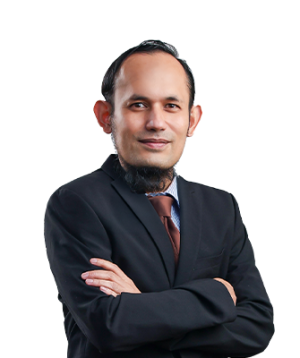
Dr. Khor Leet Ming
- Heart & Vascular
Dr. Kurnia Prima Sawai Bin Suardi